Trigrams Bagua: Decoding the Building Blocks of the I Ching
Zoey
You see the trigrams bagua as the basic parts of the I Ching, which is also called the Book of Changes. Each trigram has three lines. The lines are either solid (yang) or broken (yin). These lines show how yin and yang work together. The patterns show important ideas about change and balance in nature and in your life. The trigrams bagua are very important in Chinese philosophy, fortune telling, and daily life. The table below shows how each trigram stands for basic ideas, natural forces, and family roles:
Trigram |
Name (Pinyin) |
Symbolic Meaning |
Family Role |
Element |
|---|---|---|---|---|
☰ |
Qián |
Heaven |
Father |
Metal |
☳ |
Zhèn |
Thunder |
1st Son |
Wood |
☵ |
Kǎn |
Water |
2nd Son |
Water |
☶ |
Gèn |
Mountain |
3rd Son |
Earth |
☴ |
Xùn |
Wind |
1st Daughter |
Wood |
☲ |
Lí |
Fire |
2nd Daughter |
Fire |
☱ |
Duì |
Lake |
3rd Daughter |
Metal |
☷ |
Kūn |
Earth |
Mother |
Earth |
Key Takeaways
The eight trigrams have three lines. The lines show yin (broken) and yang (solid) energies. These energies explain balance and change in nature and life.
Each trigram stands for natural forces, family roles, elements, and directions. They help you understand how energy moves and how to find harmony.
Trigrams join in pairs to make 64 hexagrams. These hexagrams help you think about yourself and make choices. They show changes inside you and around you.
You can use the trigrams every day for self-discovery. You can also use them to set up your home with feng shui. They can help you get healthier and happier.
The trigrams are still important today in psychology, martial arts, art, and traditional medicine. They give you tools to grow and find balance.
Trigrams Bagua Origins
Yin and Yang Duality
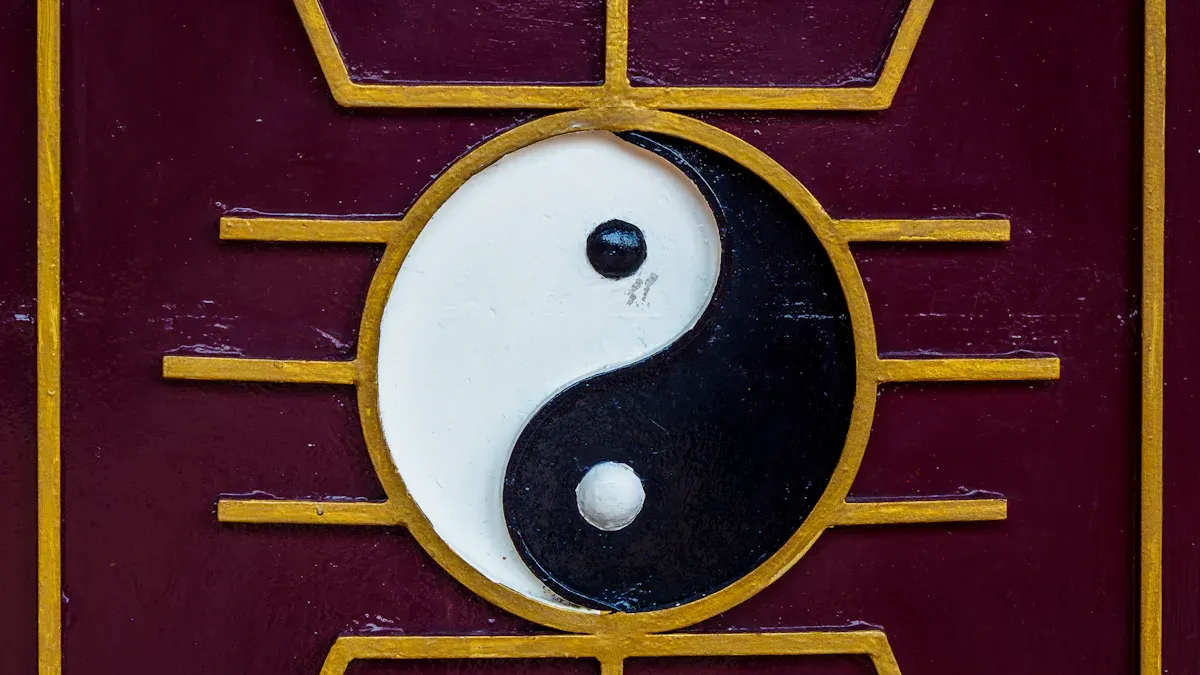
When you study the trigrams bagua, you learn about old Chinese ideas. The trigrams come from yin and yang. These are two opposite forces that shape everything. Yin means soft, dark, and female. Yang means hard, bright, and male. You can see these opposites in nature. Night and day are examples. Earth and sky are too. The trigrams use solid lines for yang. They use broken lines for yin. Each trigram has three lines. This lets yin and yang mix in many ways.
The trigrams teach that opposites must balance. Nothing stays the same forever. Yin and yang always move and change. This creates new patterns. This movement is at the center of the i ching. Old Chinese ideas say both sides are needed for peace. The trigrams bagua help you see how balance works in life and in the world.
Aspect |
Yin (阴) |
Yang (阳) |
|---|---|---|
Trigram Line |
Broken (--) |
Solid (—) |
Symbolic Meaning |
Soft, dark, receptive |
Firm, bright, creative |
Natural Example |
Earth, night |
Heaven, day |
Role |
Mother, daughter |
Father, son |
Early and Later Heaven Sequences
The story of the trigrams bagua begins with Fu Xi. He is a famous person in old Chinese stories. He saw patterns in nature and on animal backs. One animal was the dragon horse from the Yellow River. These patterns became the first trigrams. Old Chinese ideas used these symbols to explain balance and the main rules of the universe. You can find these ideas in old Chinese books like the Shangshu and Guanzi.
There are two main ways to put the trigrams in order. One is the Early Heaven (Fuxi) sequence. The other is the Later Heaven (King Wen) sequence. The Early Heaven sequence shows perfect balance. Each trigram is paired with its opposite. This order stands for the world before change. Everything is peaceful and in harmony. The Later Heaven sequence is not the same. It matches trigrams to compass points and time cycles. This order shows the world after change starts. Movement and change happen here. The Later Heaven sequence is used in feng shui and daily life. It helps you see how balance changes over time.
The trigrams bagua, through these orders, teach about balance, change, and how yin and yang work together. They show how old Chinese ideas used simple lines to explain the main rules of the universe.
8 Trigrams Symbols
Trigram Structure
Each trigram in the 8 trigrams bagua has three lines. The lines are stacked on top of each other. Some lines are solid, and some are broken. A solid line means yang, which is active energy. A broken line means yin, which is passive energy. Every trigram has its own pattern of lines. This pattern shows how yin and yang mix. The mix creates different kinds of energy.
The eight trigrams are not made by chance. Each one shows a special way energy moves and changes. Three solid lines mean pure yang energy. Three broken lines mean pure yin energy. The other trigrams use both solid and broken lines. This makes a symbol language you can use. It helps you understand the world around you. The 8 trigrams show how balance and change work together. You can see this in nature and in your life.
The eight trigrams are more than just lines. They are like a map of energy. This map shows how the universe moves and changes. You can use this map to find balance and harmony.
Trigram |
Symbolic Structure (Lines) |
Traditional Interpretation |
Natural Element |
Attributes |
|---|---|---|---|---|
Qian |
Three unbroken lines (yang) |
Heaven, firmness, leadership |
Heaven |
Firmness, leadership |
Kun |
Three broken lines (yin) |
Earth, flexibility, nurturing |
Earth |
Flexibility, tolerance |
Zhen |
One unbroken at bottom, two broken above |
Thunder, vibration, initiation |
Thunder |
Vibration, initiation |
Xun |
Two unbroken above, one broken at bottom |
Wind, flexibility, penetration |
Wind |
Flexibility, penetration |
Kan |
Broken between two unbroken |
Water, flow, coldness |
Water |
Flow, coldness |
Li |
Unbroken between two broken |
Fire, brightness, beauty |
Fire |
Brightness, beauty |
Gen |
Two broken above, one unbroken at bottom |
Mountain, stillness, stability |
Mountain |
Stillness, stability |
Dui |
One broken at top, two unbroken below |
Lake, joy, communication |
Lake |
Joy, communication |
Meanings and Elements
Each of the 8 trigrams has a name and a symbol. Each one also has a main meaning. You can use these meanings to learn about energy in your life. The eight trigrams connect to things like earth, water, fire, and wind. They also link to ideas like leadership, joy, and knowledge. When you study the trigrams, you see how each one brings a special kind of energy.
Gua Name |
Symbol |
Core Meaning |
|---|---|---|
Zhen |
☳ |
New beginnings, wood, family |
Xun |
☴ |
Wealth, abundance, wood, prosperity |
Li |
☲ |
Fame, reputation, fire, social standing |
Kun |
☷ |
Love, partnerships, earth, relationships |
Dui |
☱ |
Joy, completion, metal, children |
Qian |
☰ |
Leadership, helpful people, metal, support |
Kan |
☵ |
Career, life path, water, fluidity |
Gen |
☶ |
Knowledge, stillness, earth, learning |
The eight trigrams also connect to the Five Elements theory. Wood goes with wind and thunder. Fire goes with the trigram of fire. Earth goes with earth and mountain. Metal goes with heaven and lake. Water goes with the trigram of water. This system shows how energy moves in cycles. Each trigram adds its own meaning to the balance of nature.
You can use the eight trigrams to see how energy changes in your home. You can also see it in your body and mind. The i ching uses these symbols to help you understand energy flow. It shows why balance is important. When you use the eight trigrams, you learn how to find harmony and deal with change.
Natural Phenomena and Directions
The eight trigrams do more than show lines and elements. They also stand for natural forces and directions. They show cosmic cycles too. Each trigram matches a part of nature. Each one also matches a compass direction, a season, and even a planet. This helps you see how energy moves through time and space.
The eight trigrams make a map of the world. In feng shui, you use this map to place things and create harmony. The i ching uses the eight trigrams to show how energy moves through seasons and directions. Each trigram brings its own energy. This helps you find balance and meaning in your life.
The eight trigrams are not just about nature or directions. They also show how energy connects your inner world to the universe. You can use the eight trigrams to understand health, wealth, wisdom, and harmony. The trigrams bagua help you see the big picture and the small details at the same time.
The eight trigrams are important in cosmology too. Ancient Chinese thinkers linked the trigrams to the stars, sun, and moon. They saw the eight trigrams as a way to explain time cycles. They also used them to show how energy flows in the universe. When you use the eight trigrams, you join a long tradition. This tradition values balance, change, and the meaning of every part of life.
I Ching Hexagrams
Trigrams to Hexagrams
The trigrams are the main part of the I Ching. Each trigram has three lines. The lines can be solid (yang) or broken (yin). When you put two trigrams together, you get a hexagram. A hexagram has six lines. There are 64 hexagrams in total. Each one shows a different lesson or situation. The bottom trigram often shows your inner world. The top trigram shows what is happening around you. These pairs help you see both inside and outside your life.
The 64 hexagrams are not random. Ancient people put them in special orders. These orders are called the Fu Xi and King Wen sequences. The patterns show how trigrams connect and how nature changes. The 64 hexagrams are like a map of all changes in life. Each hexagram is a symbol of change. It shows how yin and yang work together every moment.
Divination and Interpretation
People use the 64 hexagrams for i ching divination. This helps them learn about their lives. You can toss coins or use yarrow stalks to make a hexagram. You build it one line at a time. Each line is yin or yang. Sometimes a line is moving, which means it is changing. A moving line shows change and leads to a new hexagram. This helps you see what is happening now and what might change.
Hexagrams are symbols of change and help you make choices. You read the meanings of the hexagram and its lines to answer your question. The system does not give set answers. It helps you think and find balance with change. Many people use i ching readings to learn about themselves and understand what is happening.
The 64 hexagrams have many meanings. Each one uses two trigrams. They show both inside and outside forces. You can use these symbols to look at problems, changes, and new starts.
Today, people also link the hexagrams to psychology. Carl Jung thought the hexagrams were like basic ideas that help you know yourself and the world. The I Ching is still used today. It helps people deal with change and find new paths.
Trigrams in Practice
Daily Life and Self-Discovery
You can use the eight trigrams to help with daily choices. Each trigram stands for a part of life, like creativity or joy. Some trigrams show clarity or stability. When you look at the eight trigrams, you see how energy moves. This energy is in your home, body, and mind. Many people use the trigrams to think about their feelings and actions. You might have a question and pick a trigram. Then you think about what its lines mean for you. This helps you understand problems, relationships, and your strengths.
The eight trigrams also help you set up your living space. Today, you can use the Bagua map to link home areas to life parts. These parts can be career or relationships. You can make small changes, like adding plants or moving furniture. This can help energy flow better and bring more balance. The eight trigrams help you see your life as one whole. They help you grow and handle change.
The eight trigrams show that energy always moves. When you learn these patterns, you get insight and find harmony in life.
Feng Shui and Martial Arts
Feng shui uses the eight trigrams to make your space peaceful. Each trigram matches a direction, element, and energy type. For example, Zhen brings movement and new starts. Kun gives stability and care. You can use the eight trigrams to place rooms or furniture. You can even use them to place mirrors. This helps you balance energy and improve health and happiness.
Trigram |
Element |
Direction |
|
|---|---|---|---|
Qian |
Metal |
Northwest |
Leadership, strength |
Kun |
Earth |
Southwest |
Support, stability |
Zhen |
Wood |
East |
Action, growth |
Xun |
Wood |
Southeast |
Flexibility, progress |
Kan |
Water |
North |
Flow, resilience |
Li |
Fire |
South |
Clarity, passion |
Gen |
Earth |
Northeast |
Stillness, rest |
Dui |
Metal |
West |
Joy, communication |
In martial arts, the eight trigrams inspire movement and ideas. Baguazhang uses round steps and smooth forms. You practice moving like the trigrams, always changing. This style teaches you to use energy well and stay balanced. You learn to face problems with flexibility. The eight trigrams help you build skill and inner strength.
Modern Relevance
Today, you see the eight trigrams in many places. In art and culture, the trigrams shape how people see space and time. Some companies use the eight trigrams to solve problems in creative ways. They show how energy and ideas mix. In psychology, the trigrams help you understand your feelings and choices. They link personal growth to the flow of energy.
Traditional Chinese Medicine still uses the eight trigrams to explain health. Doctors look at how energy moves in your body. They use the trigrams to bring back balance. The eight trigrams also help you make choices and face change. By learning from the eight trigrams, you get tools for growth in a fast-changing world.
The eight trigrams are still used today. They help you find energy, balance, and meaning in both old and new ways.
Understanding the trigrams bagua gives you the key to the I Ching. These trigrams form the base for every hexagram and show how balance shapes your world. Today, you find their wisdom in psychology, art, and daily life. Many people use them to improve health, make better choices, and create harmony at home. If you want to learn more, explore books and guides that explain the trigrams and their uses.
When you study the trigrams, you discover tools for self-growth and a deeper connection to nature and culture.
FAQ
What is the main purpose of the trigrams Bagua?
You use the trigrams Bagua to understand how energy moves and changes in your life. Each trigram shows a different pattern of yin and yang. These patterns help you find balance and harmony in nature and daily living.
How do I use the trigrams in daily life?
You can use the trigrams to guide choices at home, in relationships, or for self-reflection. Many people use a Bagua map to arrange rooms or objects. This helps energy flow better and supports health, happiness, and growth.
Can anyone learn to read the I Ching with trigrams?
Yes! You do not need special skills. You start by learning the eight trigrams and their meanings. Then you combine them to form hexagrams. With practice, you can use the I Ching for insight and guidance.
What is the difference between a trigram and a hexagram?
A trigram has three lines. A hexagram has six lines. You create a hexagram by stacking two trigrams. Each hexagram gives a deeper message about change and balance in your life.
Are the trigrams only used in Chinese culture?
No. People around the world study and use the trigrams. You find them in art, philosophy, and even martial arts. The ideas of balance and change are universal, so anyone can learn from the trigrams Bagua.